
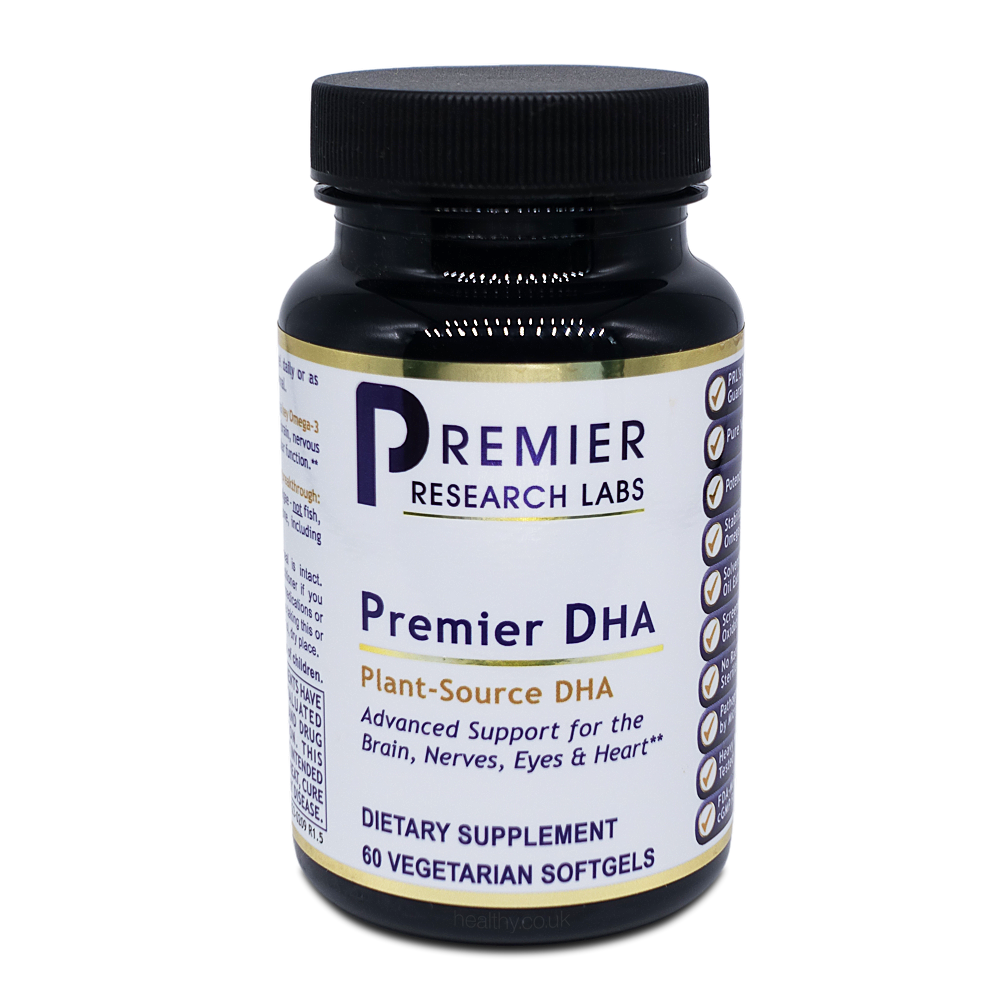
PRL DHA Vegan Omega-3
£46.75 inc. VAT
Premier DHA Omega-3 by Premier Research Labs is a plant-source Omega-3 DHA fatty acid food supplement derived from algal oil that supports brain, nerves, eyes and heart function.⚕️ This is a practitioner-only product. If you are a client of a practitioner, please phone us on 020 8480 1000.
Out of stock
Premier DHA delivers a pure, plant-based source of omega-3 DHA derived entirely from non-GMO algae. DHA is widely recognised for its role in supporting normal brain function, healthy vision and overall nervous system wellbeing. As a vegan alternative to fish oil, this algal DHA offers the same key fatty acid without the environmental or dietary concerns associated with marine sourcing, making it suitable for adults, children and anyone looking for a clean, sustainable omega-3 supplement.
This formula contains 200 mg DHA per capsule, suspended in a simple blend of sunflower oil and natural tocopherols. Because algae are the original producers of DHA in the marine food chain, algal oil provides a direct, efficient and contaminant-free source of this important nutrient. Many individuals choose algal DHA for cognitive support, eye health and general cardiovascular wellbeing, while its gentle nature also makes it easy to incorporate into daily routines for children.
Premier DHA comes in excipient-free, vegan capsules with no artificial additives, binders or common allergens. Its clean formulation, high purity and plant-based origin make it an excellent choice for those seeking a straightforward omega-3 supplement to support long-term wellbeing, clarity and balanced health.
Directions: Adults or Children (12 years and over): Take 1-2 caps daily, Children (age 3-12 years): Take 1 cap daily. Children (4-8 years): contents of capsule may be sprinkled in a small quantity of food or mixed in juice to avoid swallowing a capsule.
| Ingredients per veg cap | Amount |
|---|---|
Vegan product. 100% solvent free, excipient-free. No magnesium stearate, milk, soy, salt, sugar, wheat, artificial colours, favours, preservatives, binders, glues, or other potentially toxic excipients often found in tablets and gelatin capsules. Free from GMOs. Violite bottle. | |
| DHA (Docosahexaenoic acid from algal oil) | 200 mg |
| Other Ingredients:
Plant-source capsule (cellulose, water), Sunflower Oil, Tocopherols (used as a preservative) | |
Food supplement name: Premier DHA
Used nutritionally for: Supporting Brain, Nerves, Eyes and Heart function.
Available size: 60 veg capsules x 200mg
Directions: Adults or Children (12 years and over): Take 1-2 caps daily, Children (age 3-12 years): Take 1 cap daily. Children (4-8 years): contents of capsule may be sprinkled in a small quantity of food or mixed in juice to avoid swallowing a capsule.
Contraindications: Do not take if hypersensitive to any of the ingredients. If pregnant or breastfeeding‚ it is always best to consult a health professional before taking this or any other product.
Allergens & potential side-effects: Capsules contain corn starch.
Dietary information: Suitable for vegans and vegetarians.
Suggested combinations: Take with antioxidants, curcumin or green tea extract
Best Before Dates: PRL now spray-print best-before dates in the format "Best By YY-MM-DD" on the base of most of their bottles, where YY is the year, MM is the month, and DD is the day. Where that is missing, the best by is two years after the manufacturing date which is of the format: "MFG YYMMDD-123456".
Omega-3 fatty acids are defined as essential fats, which means that the body cannot make them from scratch, and so they must be supplied by the diet. The most important form of these Omega-3 fatty acids is DHA (Docosahexaenoic Acid), which is a long-chain type of Omega-3 fatty acid essential for the healthy functioning of the brain, nervous system, cardiovascular system and, in children, eye tissue development.
DHA, unfortunately, can only be adequately sourced from fish and shellfish, but our bodies can make it by converting the omega-3 Alpha-linolenic acid (ALA) found in plant sources such as flaxseed oil and other cold-pressed vegetable oils, nuts (especially walnuts) and green leafy vegetables.
However, our bodies are very inefficient at converting ALA into DHA (usually <5%), which is why vegetarians and vegans, or anyone who does not have adequate quantities of fish or shellfish in their diet, can struggle to maintain optimum levels of DHA. (Many also choose to limit their fish and shellfish intake due to the increasing toxicity of our seas, lakes and oceans.)